First off, hello! I hadn't forgotten this blog existed, but I'm going to have to rethink how I want to use it. I'm still likely to talk about tea and poetry most of the time, but for the moment don't expect anything regular or quite so structured. I'm at a point in life where I should start thinking about longer term plans and patterns. That doesn't mean that I'm actually going to, but in as much as I can use this blog for rough drafts and direction, I'll do so.
To that end, I'd like to pin some words down on the subject of horror and monsters, a subject near and dear to me that I always struggle to explain my full connection to. Fair warning, this is likely to wander about a great deal.
As early as I can remember, I've had a paired fascination with ghost stories and nightmares. My own dreams were and have ever been filled with monsters and the end of the world, but always in fantastical scenarios. Floods and zombies and serial killers, undead personally coming to the door of five year old me to murder me. And for all that these sound horrifying, they didn't scare me in the same way that more mundane dream scenarios have. They were still frightening, and I'd wake up with that heightened paranoia that makes me watch shadows at 3 a.m. to this day, but it's a different plane of fear, and thus, in a way, comforting.
As for ghost stories, they were my introduction both to formulaic story-telling and fear as entertainment. My close friends got into the habit of asking me to tell them ghost stories on long rides or sleep-overs, and I'd string together the necessary beats and imagery as I went, fascinated that the words I was making up off the top of my head could possibly be frightening. Obviously the blood and the mirrors and the ghosts weren't real,* so how could this be affecting them? And given how much they were enjoying it, how could I make it affect me? Could I convince myself to feel afraid, or did I need darker material to start with?**
It's probably also worth mentioning that I'm not entirely neurotypical. I've never had a formal diagnosis, but I went through most of my life a half-beat off from everyone else. I am very likely on the autistic spectrum. I don't process emotions the same way as most people, I certainly don't react to them in the same way, and as I grew up, most of my efforts were spent on understanding why I seemed to living in a parallel dimension from the people around me. Mostly I figured out how to fake the expected reactions and social scripts, but they never came naturally and never made sense. This will come up again later.
And so life went on and I grew up. The usual tragedies of childhood followed, as well as tragedies that shouldn't be normal. I graduated from books of ghost stories scavenged from the library to my older sister's Fear Street books, hungry for blood and phantasms, and grew a collection that eclipsed hers. I was never deeply into movies, but bored and alone over the summer I'd catch any bizarre horror movie that crossed my path. In middle school, I fell in love with the Count of Monte Cristo for an execution scene as much for the beautifully executed revenge plot. In high school I took a summer class on vampires in myth and literature and fully codified my love for Gothic fiction.
Throughout this all, I was a clearly labeled Weird Kid. "Gifted" teacher's pet, shy, but also widely referred to (affectionately) as evil by my family and friends. Teenagers always feel like outsiders, but the struggle of understanding basic social interactions combined with the knowledge that the stories and images that most pleased me were horrifying to the general public led to my feeling a great deal like a monster in a human suit. And some days that was (is, really) something I'm proud of, and some days (less of these now) there was this vast grief that I couldn't understand or become human. I was at points afraid that enjoying tales of fear and suffering meant that I was myself a bad or dangerous person. It sounds silly now, but I avoided certain martial arts and research options because I didn't want to risk it. (Knives are pretty, but maybe I shouldn't be allowed access to them because I think that. Fire is beautiful, but perhaps I would be unsafe?)
I'm not a teenager anymore, and I know all of that last is bullshit (and when said by others, was said in jest), but it stuck with me for years, and in the same way that I spent time building an artificial system for socializing once I realized mine was unexpectedly different from those around me, I devoted time to codifying my own internal morality, so that I could be certain that even if I was weird or different, I was at least comfortable that I was a good person. Which I was, and am, but it will always be something I watch and try to improve.
So is it any wonder that I developed sympathy for monsters? I still love a good ghost story or slasher flick, but tales of monster protagonists choosing to do the right thing out of love or wonder, or reverting back to their base natures, or trying to find a balance...these are all near and dear to my heart. What is humanity and what is human? What do you do with the knowledge that the terrifying Other in the narrative is, in fact, you?
The undergraduate thesis that I devoted woefully little time to was specifically about the exploration of the relationship between Other and Self in Gothic literature, and the texts I looked into were all about blurring that line. Possession, doppelgangers, revealing the monster within.... It's a topic I'd like to revisit now that I have some distance, because I had no idea what to focus on or what I was looking for at the time. If I were to look at it again, I'd spend more time on Othered identities in society, which is clearly the key I was looking for and never quite managed.
What I didn't fully understand growing up was that I'm not just "weird," and I'm not alone. I'm neurodivergent, which is true of many people and means there are people out there who speak and understand the world the way I do, and I'm very queer. Both mean that there are vast sections of the country that think that I'm broken or damned or better off dead. (And if you don't think that's true, you haven't been paying much attention to the news this last year.) A significant chunk of the world has already decided that I'm Other and the monster of their story, and if that's the case, the idea of being scary instead of helpless becomes a power fantasy, and monsterhood becomes wish fulfillment.
I'm also fond of flipping the script, and rightfully calling out horror behind prevailing social norms. Because horror touches on who is and has a right to be human, and the inherent monstrousness of man. But if I go too much further down that path this will become a love letter to Get Out, and that deserves to be more than a post-script in a Sunday ramble.
So there. Some thoughts about monsters and what they mean to me. That's not everything I love about horror, or even everything that appeals to me about the topics mentioned here. And I haven't even gone into my love of ghost stories as healing narratives. But...let's leave it at that for now.
* The one and only ghost story that managed to get to me is Bloody Mary. It frustrated me to no end, because I knew better and none of the other bloody and horrific stories I was consuming even in elementary school ever stuck with me. But to this day I can't sleep if my image is being reflected in a mirror.
** I eventually discovered roller coasters and violent hobbies, and yes, adrenaline is indeed great.
Showing posts with label themes and tropes. Show all posts
Showing posts with label themes and tropes. Show all posts
Sunday, June 18, 2017

Friday, April 1, 2016
Themes and Tropes: Con-artist heroes
"It's called a hustle, sweetheart."
I joke sometimes that the second archetype I ever bonded with was the con-artist, so when Disney released an adorable animated movie with a fox con-artist who shares my name, I of course had to go see it. Zootopia is adorable and surprisingly well done, and though it falls more squarely into the buddy cop genre than anything, it got me thinking again on one of my old favorite tropes. Con-artists, grifters, swindlers, snake oil salesmen and all the rest make for fascinating side-characters and villains, flavorful and troublesome obstacles in a more straight-forward hero's way, but what is it that we're looking for when we make them the hero of the story?Part of it is the thrill of watching someone who is very good at what they do. The same competence porn enjoyment you get out of watching the many Sherlock adaptations or any heist movie ever. The odds are arrayed against our heroes, but instead of asking whether or not they'll succeed, our question becomes how and with what clever solution. Some slight of hand? A plausible lie and smile to the right person? Con-artists take the social contract and manipulate it into working for their own purposes, and written well it's artful to watch. And it helps that their success and competence relies heavily on charm, such that these protagonists are almost by definition smooth, suave, and against all better judgment, likable. You find yourself rooting for them in part because that's their job.
But there are a few more conflicted themes tangled up into the archetype of the con-artist as protagonist, and those are where most of my particular fondness lies. Questions of masks and identity, the need to constantly be an outsider, traveling and alone, and all the grey issues of morality they carry with them. Grifter archetypes in America are particularly tied in to the traveling salesman trope, but bandits and highwaymen parallels show up from time to time. They have to be the outsider and the new face, because once their face is known, their scheme is bust. But how long can anyone live like that? Is the thrill and reward worth it? What happens if and when you get attached to someone or something and find yourself unable to move on? Sometimes the conclusion of a con-artist story is a kind of redemption, the finding of home or love or belonging, but sometimes the draw of the road and the next great scheme is unavoidable and they end up right back where they started.
And by virtue of being a protagonist, and usually likable, con-artist heroes tend to find themselves burdened with hearts of at least fool's gold, which conflicts interestingly with a life of swindling people. Maybe their redemption arc ends with the realization that they've done wrong, but it's just as likely that their moral flexibility allows them to engineer revenge and justice stories that other heroes might consider beneath them, conning and humiliating people who very much deserve it. Personally I'm a sucker for a good revenge story, so give me a shady hero with a grudge any day.
A good con-artist story touches on most of these threads, and I haven't encountered nearly as many of those as I think the archetype deserves. But there are definitely good ones out there, and if it's a subject that interests you I recommend all the media below:
Movies

"For the first time in my life, I got my foot caught in the door."
Almost certainly the start of my con-artist obsession, The Music Man is a classic example of the con who gets too close to his mark. "Professor" Harold Hill rolls into town as our aforementioned traveling salesman, quite literally fast talks the town into believing their community is crumbling and in need of his services, side-steps the authorities by tricking them into becoming a barbershop quartet, and only screws up by finding his heart and falling in love. As a kid I don't think I could have told you which of the two protagonists I wanted to be more: the quick and clever Hill or his love interest Marian, a librarian and misanthropic outcast bookworm, yearning for romance.
I grew up on live shows and the 1962 Robert Preston edition; I can't say anything about the more modern Matthew Broderick version.

"I got scruples too, you know. You know what that is? Scruples?"
"No, I don't know what it is, but if you got 'em, it's a sure bet they belong to somebody else!"
Paper Moon is a surprisingly heart-warming movie about a con man in the Great Depression who finds himself entrusted with the guardianship of a young girl who may or may not be his daughter. He uses her in his schemes, but it quickly becomes clear that she's the more terrifying of the two, and the movie covers their travels, tribulations, and rocky relationship. It's not a tale of redemption, exactly, but it covers heart and home fairly well.
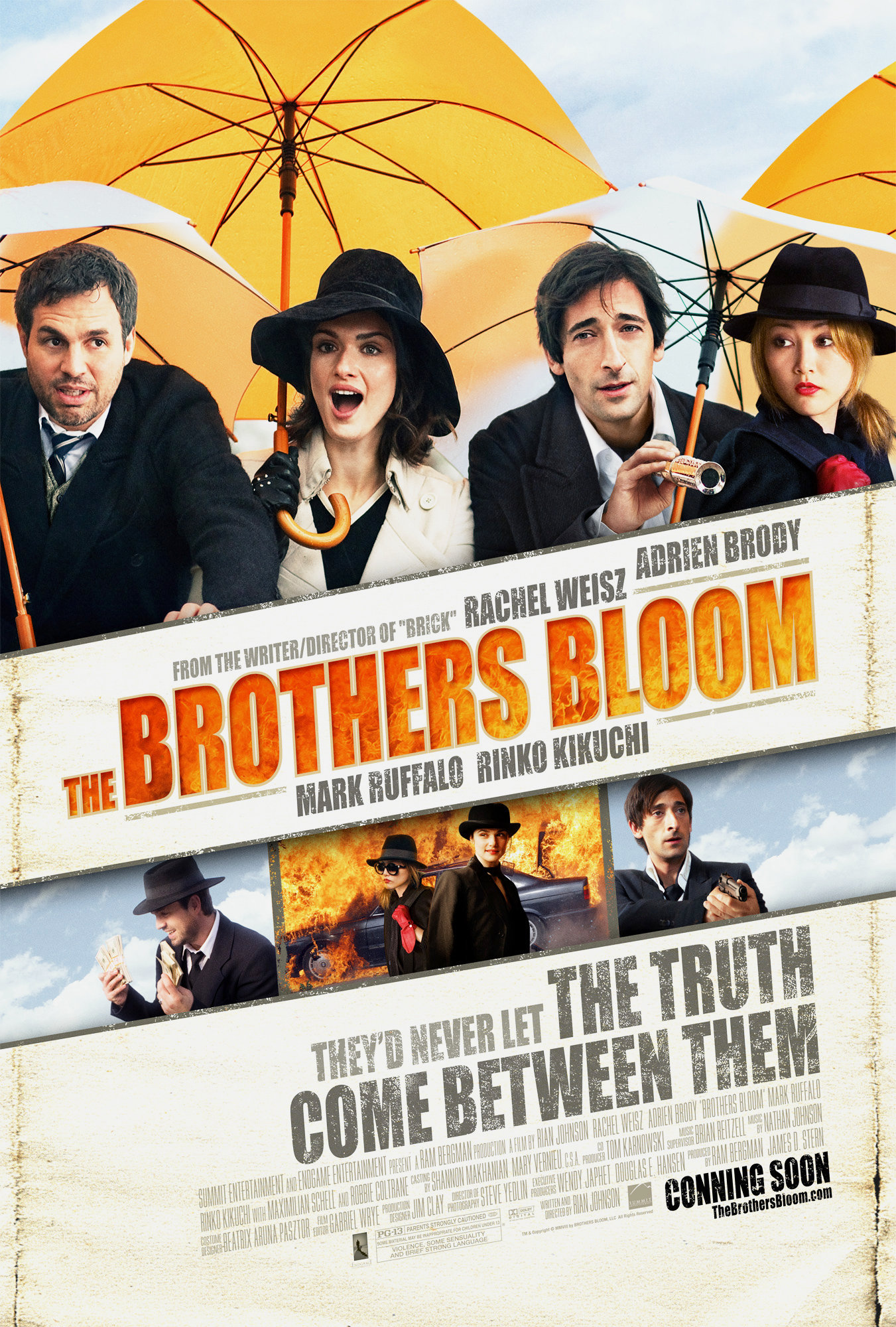
"The perfect con is one where everyone involved gets just what they wanted."
The Brothers Bloom is the stylized and artsy tale of two brothers who've built their lives and reputations around running vast and elaborate cons. Stephen, the eldest, plots everything out "the way dead Russians write novels, with thematic arcs and embedded symbolism and shit", always with his younger brother Bloom in the starring role. But by the start of the movie Bloom is exhausted and cynical from a life of lies, and wants nothing more than to find out who he really is and to fall in love off script for once. Stephen helps in the only way he knows how to, by arranging one final con. Enter their mark, the sheltered, eccentric, and infinitely talented Penelope, whose main desire is to finally see and experience the world and all its wonders and dangers.
I can't fully express my love for this movie. It's a story about stories, which is kind of my jam, and folded up in that are messages about the stories we tell ourselves and what does an authentic life mean, anyway? If I could get away with it I would quote every third line in this movie on a regular basis, and have strongly considered scattering a few of them around my house for inspiration and reminders. It's gorgeous, cleverly put together from start to finish, with every element and repeated refrain carefully considered, and I haven't even mentioned Bang Bang, the actual best character. Go watch the trailer and be instantly charmed.
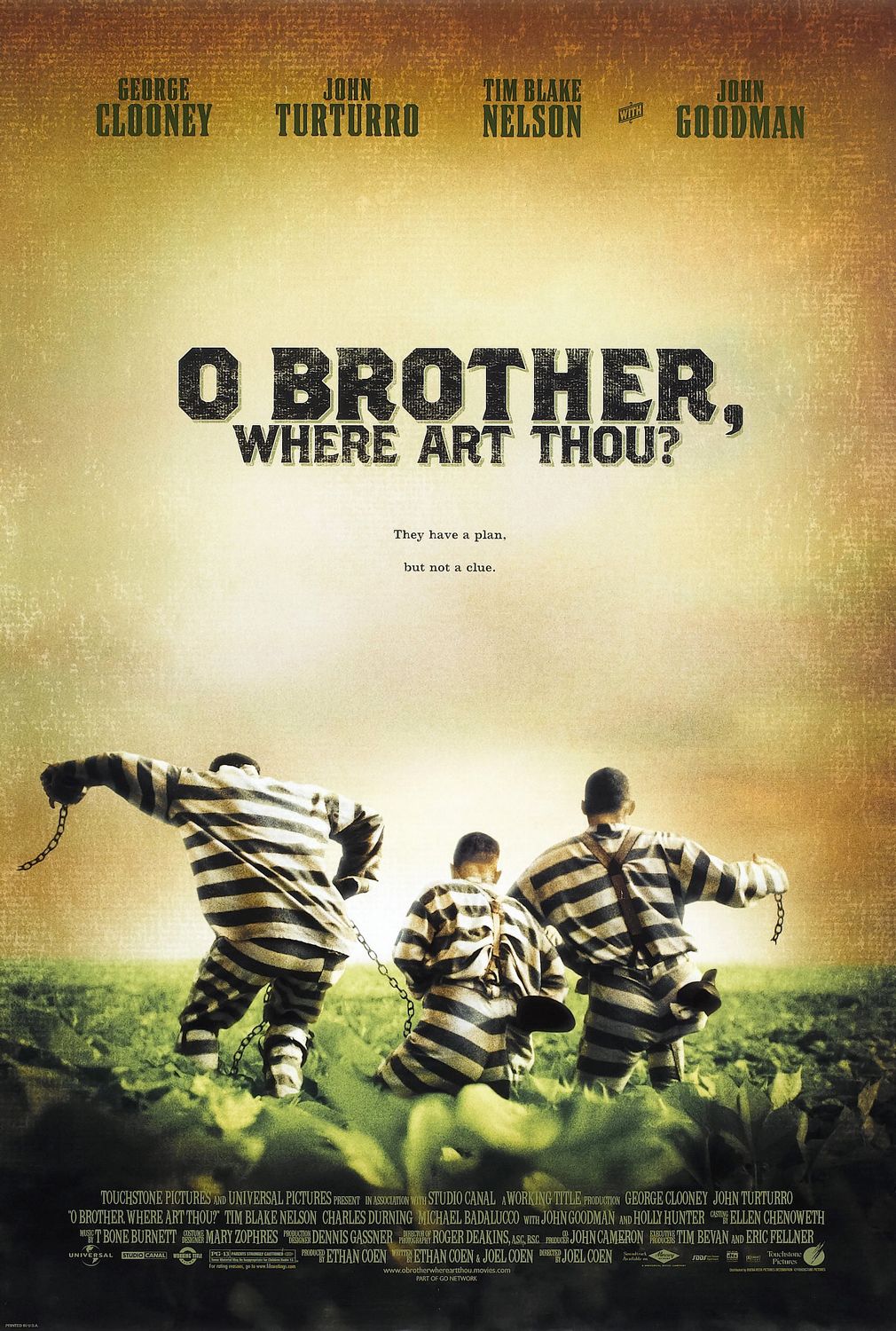
"I detect, like me, you're endowed with the gift of gab."
What can I say about O Brother Where Art Thou? It's a bluegrass rendition of that oldest and most beloved con-artist's tale, The Odyssey. (And if you don't think Odysseus counts as a con-artist, I have a wooden horse built by No One I'd like to send you.) In this case, Ulysses Everett McGill escapes from a chain gang with his two accomplices, Pete and Delmar, and proceeds to travel across rural Mississippi, encountering beautiful sirens, a blind prophet, and (arguably) the devil himself. The soundtrack alone is worth the watch, perfectly accompanying the shenanigans that are Ulysses's linguistic acrobatics and the trio's bizarre and borderline supernatural adventures.

"We need a miracle."
"No, we need to cheat!"
The Road To El Dorado is one of those movies I'm shocked more people haven't seen, but possibly due to the Dreamworks curse it seems to have been consistently overlooked. Which is a shame, because it's amazing. Miguel and Tulio are two low-level cheats and grifters in Seville, Spain, who wind up with a map to El Dorado and a trip as accidental stowaways on one of Cortés's ships to the New World. Quickly escaping from the terrifying Cortés, they eventually stumble their way through the forest to the city of gold, where they wind up trapped in the role of gods. It's a subject matter that could have easily gone wrong, but Miguel and Tulio are mostly thrown around by the whims of fate and scrambling to catch up, while the natives of El Dorado use them as figures in their own internal politics. It's a cheerful buddy comedy that knows where the dark and serious beats should be, and it builds a cast of characters who are easy to adore. It's also the source of some of the most useful gifs on the internet!
Really, all you need to see to find out if you'll like this movie is this opening scene:
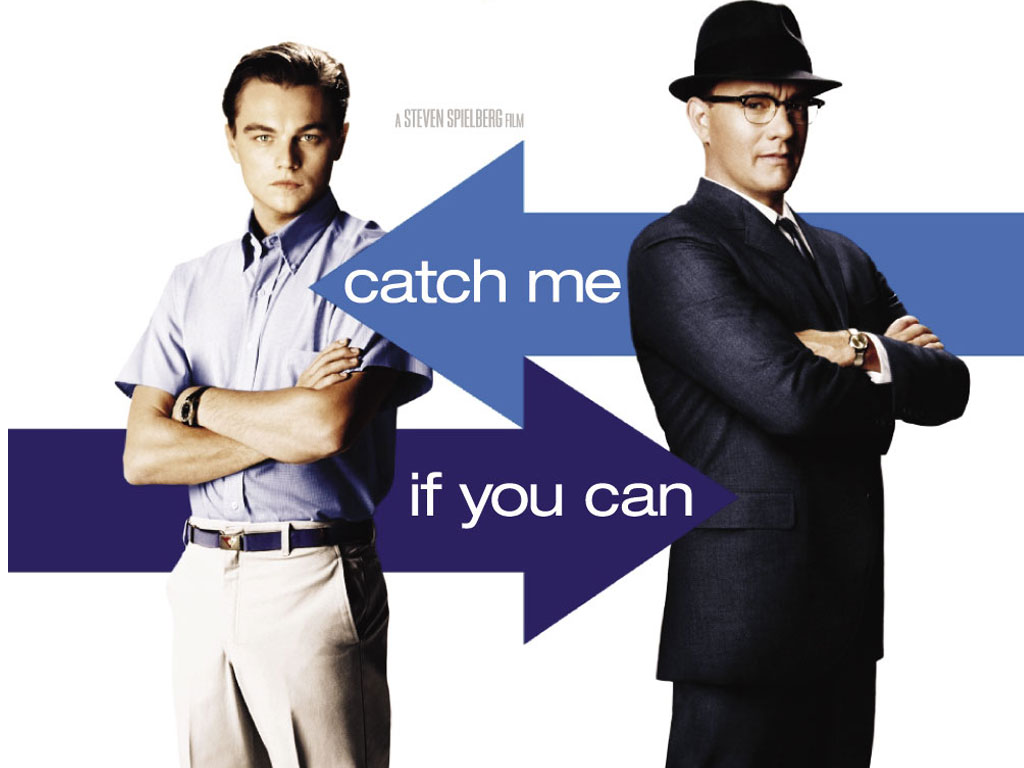
"People only know what you tell them, Carl."
I'd be remiss if I presented a round up of con-artist media without including Catch Me If You Can. The movie is a dramatization of the actual story of Frank Abagnale, one of the most famous forgers and con-artists in history, who impersonated pilots and committed massive bank and check fraud all before he turned 18. The movie focuses on those years and crimes, and the struggles of the FBI agent trying to find him, as well as a growing almost friendship between the two characters. It's a clever and stylized movie, and apparently it eventually spawned a Broadway musical, though that I have not seen.
As for the actual Frank Abagnale, after his eventual capture and imprisonment, he was released early under the condition that he help the government investigate other cases of fraud. These days he works as a security consultant. He's a fascinating person to read up on, and some of the things he's said about fraud and identity theft in the era of modern technology are unsurprisingly frightening.
TV Shows

"Right now, you're suffering under an enormous weight. We provide…leverage."
The premise of Leverage is summed up in a line from the first season: "Sometimes bad guys are the only good guys you get." Essentially, four thieves with different specialties - a grifter, a hitter, a hacker, and a straight up second-story artist slash pickpocket thief - team up with an ex-insurance agent and start running cons on bad guys to get justice for their victims. You want competence porn? Leverage has got you covered. Revenge? Absolutely, though usually not for the thieves themselves. Navigating hazy morals and redemption arcs? All there. Technically only one member of the crew is a con-artist, but nearly every plot is at least partially a con, and the mastermind and the grifter toss around named scheme ideas with glee.
I could go on and on about everything amazing about Leverage: all the characters are lovable, it's so impeccably quotable, there's an actual rule that every con has to end with the team "gloat" where the mark can see... I recently pitched it to a friend as the best TV show I know, and I stand by that statement. It's not my favorite, because I have horrible, nostalgic 90's taste, but it's five seasons of a found family of thieves Robin Hood-ing corrupt governments and businessfolk complete with heist-level suspense and some of the most well-done character arcs I've ever seen. If you haven't already watched all five seasons, I recommend you do so at your earliest convenience. It's all on Netflix, and if you make it through the pilot without falling in love, you're made of stronger stuff than me.

White Collar
Elizabeth Burke: Good luck with your little con.
Peter Burke: It's not a con.
Neal Caffrey: Technically it is a con.
Peter Burke: It's a sting.
Neal Caffrey: But sting's another word for a -
[Peter glares.]
Neal Caffrey: Okay, let's start the sting.
White Collar isn't technically based on Frank Abagnale's story, but it draws on the idea of a forger and con-artist working with the agent who caught him to catch other white collar crimes. The main emotional plot revolves around the growing friendship and buddy cop romance between Neal Caffrey, the dapper, cocky forger, and Peter Burke, the frumpy, workaholic agent who caught him. It hits all the beats: a dapper, charming protagonist, the conflict of being trapped between a confining life on the straight and narrow and your old, exciting life of crime, with loyal friends on both sides, love, loss, mysteries, a thriving fanfic community.... Plus Burke's wife, Elizabeth, is one of the strongest characters in the show, and it's surprisingly nice to see a loving, established couple as cornerstone cast members without love plots and misunderstandings thrown in for added "drama."
Plus it's Matt Bomer in suit porn. You're welcome.
Honorable Mention:

The Pretender
There are pretenders among us, geniuses with the ability to become anyone they want to be... In 1963, a Corporation known as the Centre, isolated a young pretender named Jarod, and exploited his genius for their research. Then one day, their pretender ran away..
Speaking of terrible 90's taste, the Pretender is...pretty much what it says in the quote. Jarod runs away from the evil organization known as the Centre and runs their teams a merry chase around the country, pretending to be a doctor or a lawyer or pretty much anything, in order to find out who he really is and experience real life for the first time. (Most episodes have him discovering something like ice cream with childlike delight.) Meanwhile he encounters various injustices both in the lives of the people around him and within the secrets of the Centre that he keeps digging up, and he arranges Count of Monte Cristo-esque poetic vengeance on the various petty villains who cross his path. It's cheesy and ridiculous, but surprisingly fun. Jarod and the team ostensibly attempting to catch him are all endearing, and you end up more invested in the secrets of this ridiculous organization than you really should be. I'm counting this as an honorable mention because he's not a con-artist, exactly. He's pretending to be people he isn't, but he's not actually trying to scam anyone, and through mystic genius pretender skills, can actually do everything he says he can.
Books

“To us — richer and cleverer than everyone else!”
Oh, Locke. Locke is the definition of too clever for his own good. He's the head thief and often mastermind of the Gentleman Bastards, a small gang of thieves in the notoriously corrupt city of Camorr. The Bastards, against all the laws of the underworld, spend their time conning the nobility out of their undeserved riches, and conning their fellow crooks and gangs into thinking they're just another set of passingly competent burglars. This book and this series are everything you might want from caper heists set in a grittier than standard fantasy world: twists and turns, irreverence and humor in the face of bloody danger, fantastic characters, emotional stab wounds, and a background of fascinating world-building. And this line, which won't make sense until you read it: "I just have to keep you here until Jean shows up.” I'm really not doing it anything near like justice, but suffice to say that if I picked a list of ten books you should read this year, it would be on the list.

“Steal five dollars and you're a common thief. Steal thousands and you're either the government or a hero.”
Sir Terry Pratchett spent decades writing about life and humanity in a seemingly farcical fantasy world called Discworld, and I'm firmly of the opinion that everyone could benefit from reading at least a few books in the series. Discworld is a number of scattered tales, some stand-alone, others following different characters in this world, and it by no means needs to be read in chronological order. Going Postal is the introduction of Moist von Lipwig, a classic traveling swindler and student of humanity's foibles, who opens the book on death row for his crimes. Fortunately, the Patrician, the terrifyingly effective tyrant of the great city of Ankh-Morpork, offers him a deal: run the decrepit and barely functioning Post Office and bring it back into order. Technically there's a second choice there, as Ventinari is a stickler for choices, but Moist doesn't find it quite as appealing. He spends the book running the Post Office like a con, trying to escape, and maybe accidentally starting to get invested in everything he's building. Commentary on human nature and the nature of governments abounds.
And there you have a range of some of the best con-artist protagonists I know. That should keep you busy for a while! Definitely let me know your thoughts on any of the above, I rarely get tired of talking about them, and if you have any other suggestions for similar media, I'm always on the lookout for more.
Subscribe to:
Posts (Atom)